Berber heritage
Languages such as Hassaniya Arabic carry Berber substrates and vocabulary; poetry, oral history, and artisan crafts keep older identities audible in daily speech and design.
Journey through ancient caravan routes, timeless dunes, and the nomadic soul of West Africa
Dune light is sharpest in the first hour after sunrise—ideal for photographs and for walking before heat builds.
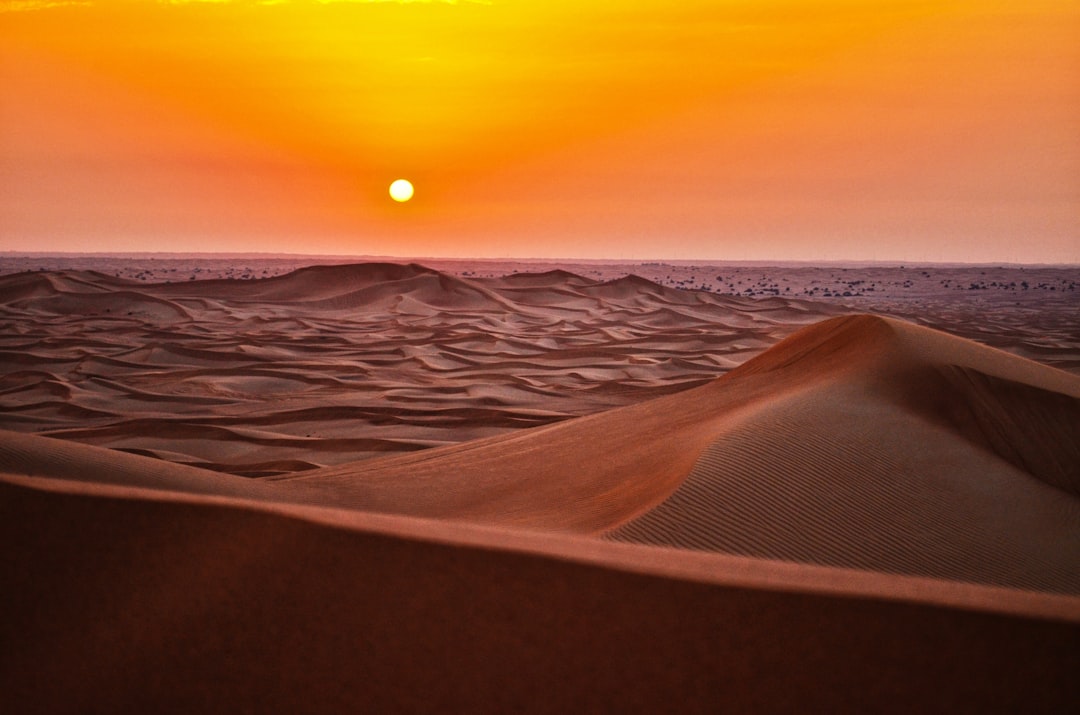
Mauritania is one of the great Saharan crossroads of West Africa. From the surf of the Atlantic to the stone plateaus of the Adrar and the sand seas farther east, the country unfolds as a sequence of climates and textures that reward slow travel. The desert here is not a single monotone: you meet dark basalt hamadas, corridors of acacia, salt-crusted depressions, and long ridges of ochre dunes that shift with the harmattan. Light changes by the hour—pearly dawn over cold sand, white midday glare, and evenings when the horizon turns molten before the sky cools to indigo.
Geographically, Mauritania occupies the western margin of the Sahara, bridging Maghrebi and Sahelian worlds. The cold Canary Current brushes coastal Nouakchott and Nouadhibou with fog and wind, while inland, continental heating draws dry air across vast interiors. Rain is scarce and unpredictable; life orbits around wells, seasonal pastures, and the memory of where storms last fell. Climate change intensifies that uncertainty, nudging pastoral communities to adapt routes, deepen wells, and diversify livelihoods while preserving knowledge that is older than any map.
Travelers seeking Mauritania desert experiences often follow arcs through the Adrar, Tagant, or Hodh regions, where escarpments and wadis tell stories of wetter millennia. The famous Erg Chebbi dunes lie across the border in southeastern Morocco, but Mauritania offers comparably hypnotic sand seas and a quieter rhythm for those willing to trade crowds for distance. Whether you move by Land Cruiser or dromedary, the Sahara travel mindset is the same: carry water generously, respect local guidance, and build slack into your itinerary for wind, bureaucracy, and the occasional mechanical hiccup.
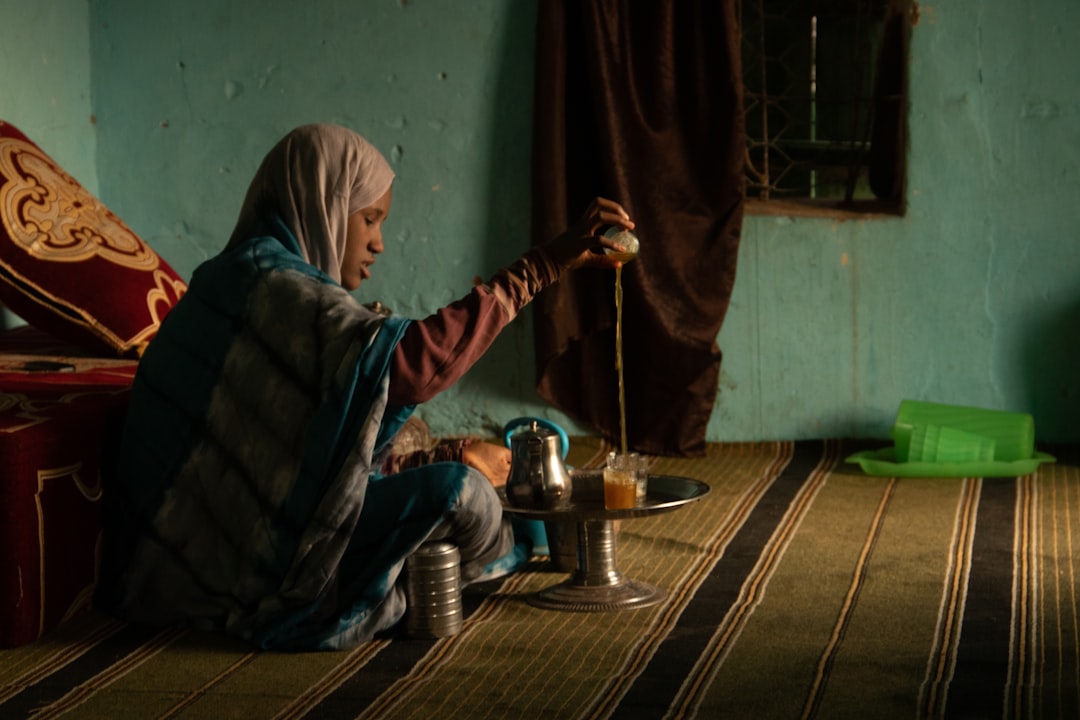
On West Africa desert routes, hospitality remains a practical ethic as much as a courtesy. Tea poured in three rounds, shade offered at midday, and patient conversation about where the road is open—these small rituals stitch together a landscape that maps only tell part of. If you arrive with curiosity and time, the Sahara stops feeling empty and starts feeling like a library of wind, stone, and stars.
Bird migration corridors, seasonal insect blooms, and sudden wildflower carpets after storms remind you that the biome is alive in pulses. Even silence has texture: the hiss of blown sand, the pop of cooling rock, the distant bark of a camel herd at a well you cannot yet see.
Berber- and Arabic-speaking communities, including Moor and Tuareg lineages, have shaped Saharan mobility for centuries—herding, trading, and weaving social networks across borders that maps redraw more often than people do.
Languages such as Hassaniya Arabic carry Berber substrates and vocabulary; poetry, oral history, and artisan crafts keep older identities audible in daily speech and design.
While Tuareg heartlands lie deeper in the central Sahara, trade, kinship, and seasonal movement link communities across Mauritania, Mali, and Niger in shared caravan memories.
Flexibility is survival: tents that travel, herds that split and reunite, and star knowledge that still complements GPS when batteries fail or dust clogs screens.
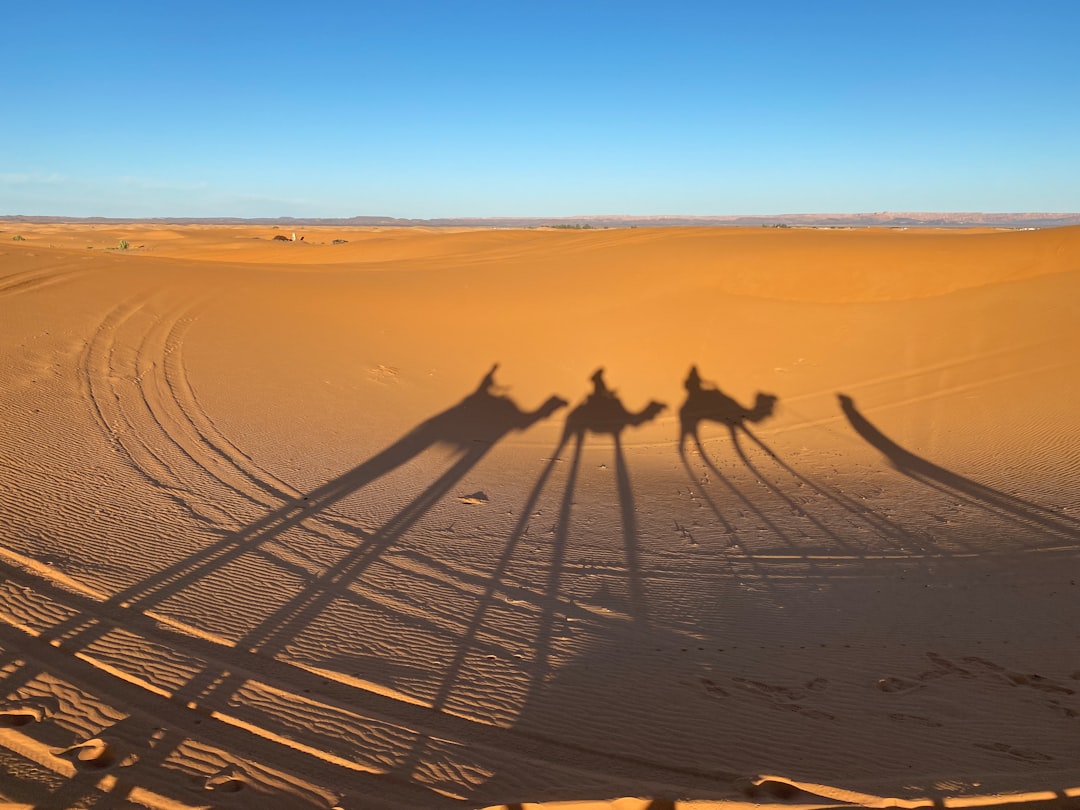
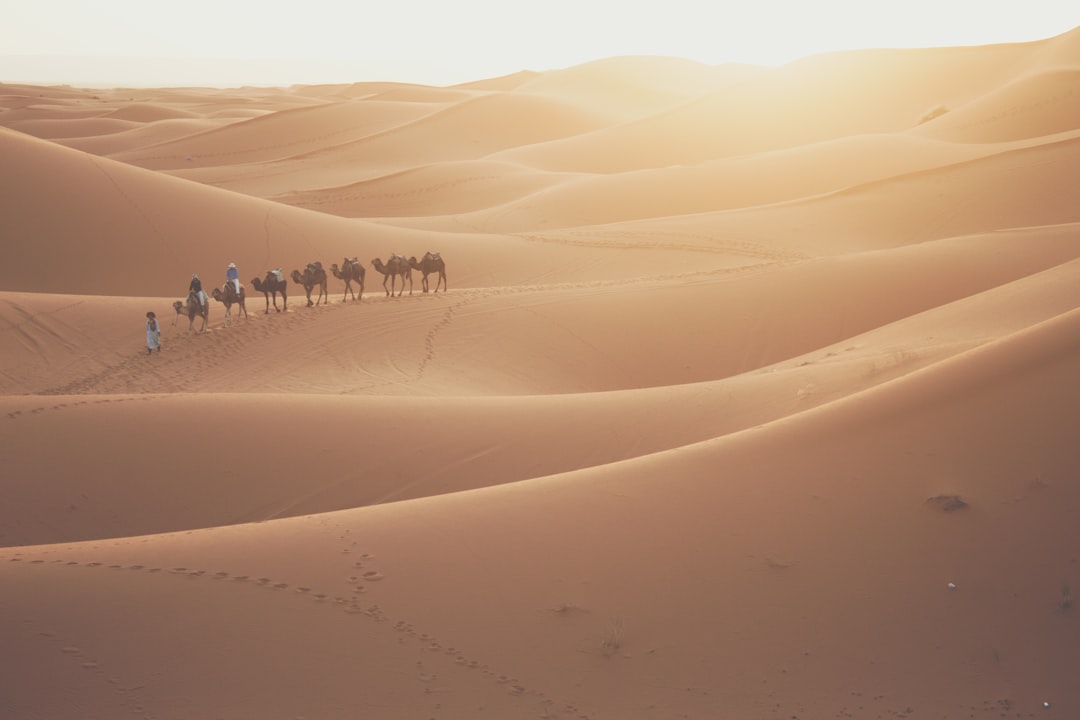
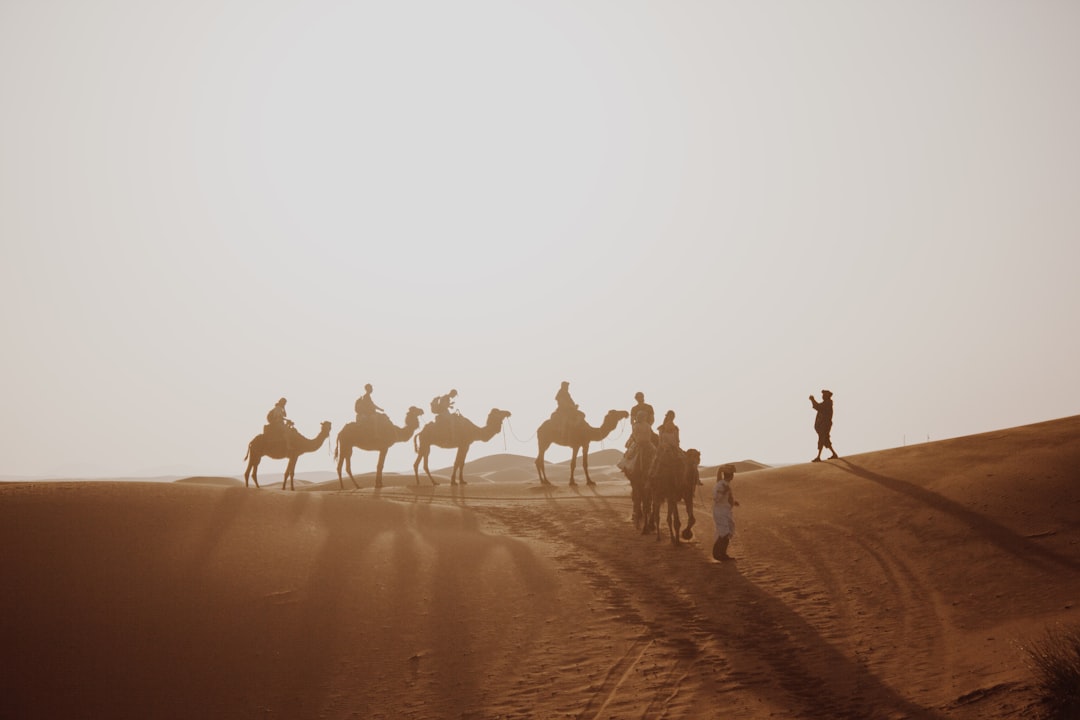
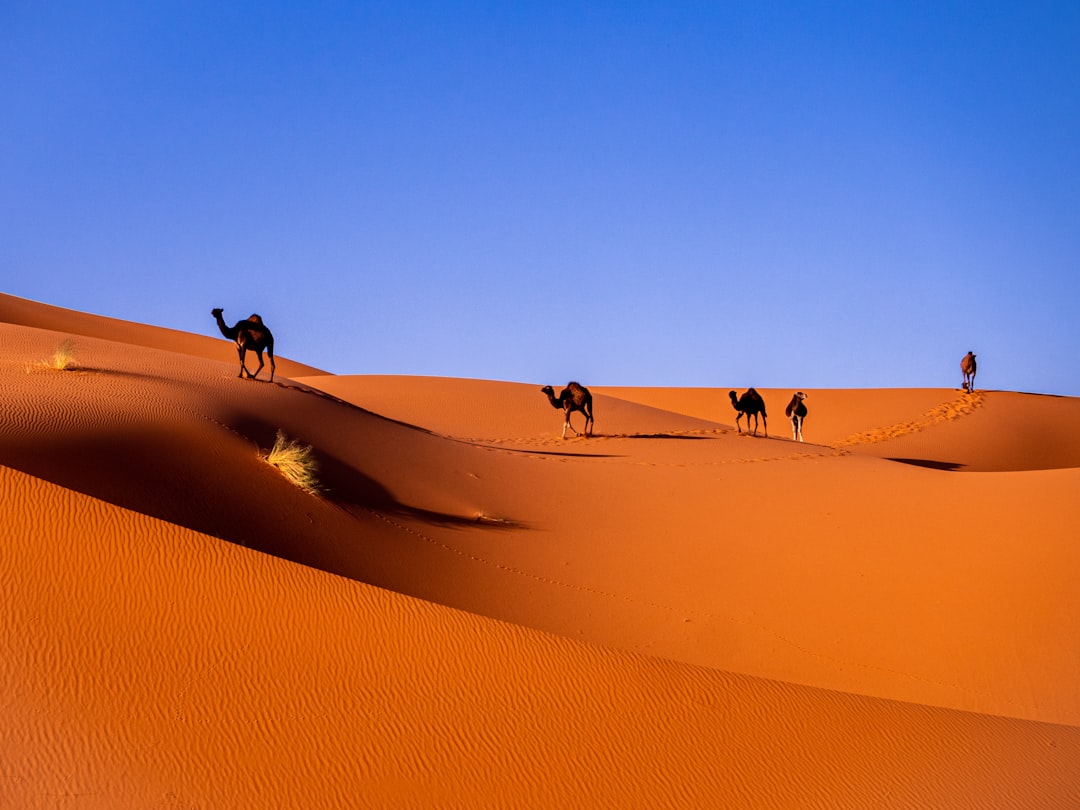
For more than a millennium, camel caravans threaded the Sahara with salt, cloth, grain, and faith. Routes shifted with politics and wells, but the dromedary remained the supreme long-distance vehicle: one hump, thrifty water metabolism, and a gait that eats kilometers if the handler reads terrain and weather. In Mauritania, memories of those caravans survive in place-names, in the layout of oases, and in families whose grandparents walked where airplanes now cross in minutes.
Today’s Sahara trade routes are highways, flight paths, and fiber-optic cables, yet the old geography still matters. Understanding where gravel gives way to sabkha, where cell signal dies, and where hospitality is obligatory is as valuable as any spreadsheet for anyone moving goods—or stories—across the desert.
Mauritania's northern neighbour and closest cultural counterpart is Morocco — the Arab Maghreb's most developed digital economy and leader in North Africa's online entertainment market.
If you plan a camel trek in the Sahara, prioritize experienced local outfitters, spare water, sun protection, and realistic daily distances. The desert rewards humility; it punishes improvisation without backup.
Far from coastal haze and city domes, the Mauritanian night reveals the Milky Way as a river of powder. Meteors scratch brief lines; satellites glide on steady tracks. For nomadic culture in Africa, those patterns were not decoration but orientation: Orion, Scorpius, and the circumpolar pivot helped herders and traders hold a line across featureless plains.
Today, astro-tourists and photographers chase Bortle-dark skies near remote camps. Bring a red flashlight, let your eyes adapt for twenty minutes, and listen—to wind on guy lines, to camels shifting in their pickets, to the uncanny quiet that makes every star seem closer. The desert at night is not an absence of life but a different frequency of it.